
There are days when we meet with our favorite friends, play games and have good conversations.
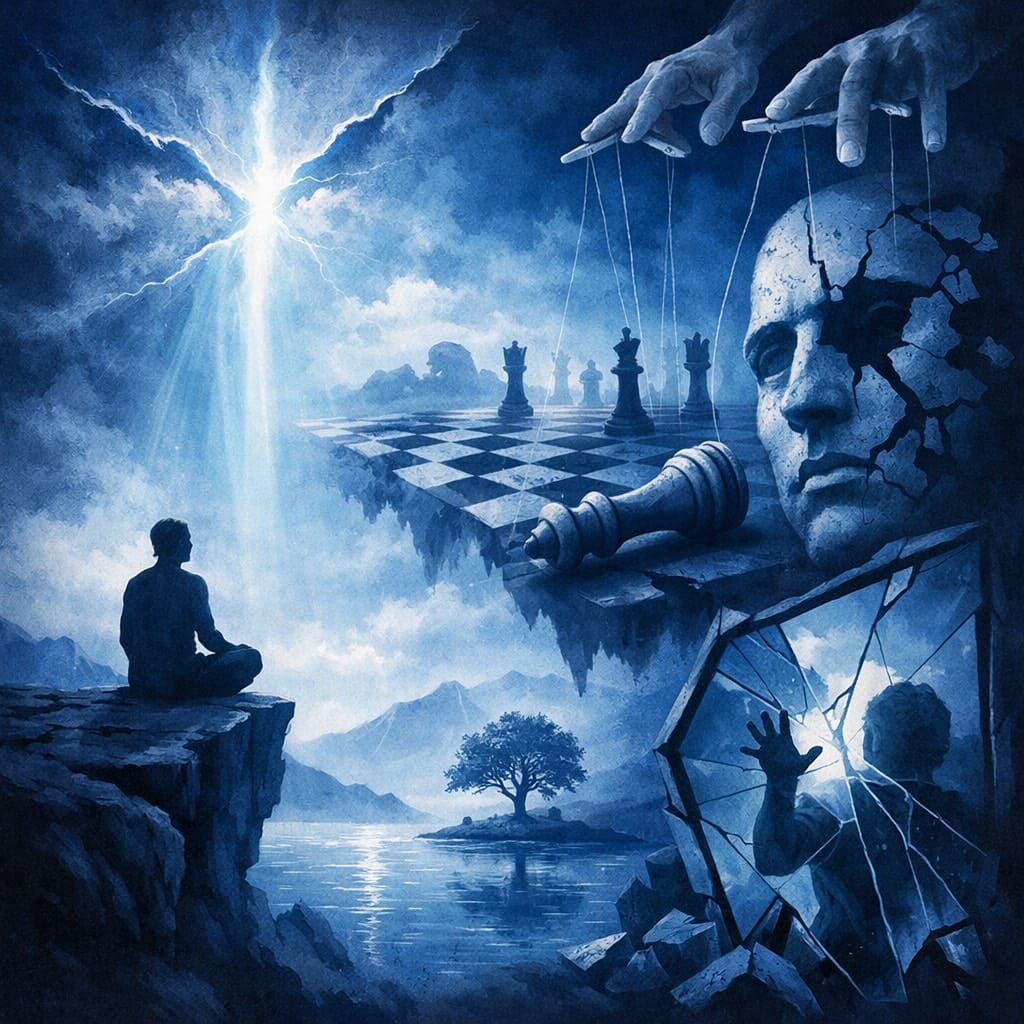
Sometimes when everything is going well, an argument flares up, sometimes it is sparked by us, sometimes by a friend. We were sitting there having a nice conversation and we think, "Where did this argument come from? Whether this happens to us or to a friend of ours, if we move slightly away from the discussion, what we will see will be something like this:
It is as if the person who has caused the argument to flare up has touched the very point that bothers and angers the other person the most. Usually the person suffering from that condition overreacts.
His voice rises, his words harden, he becomes defensive.
If we go a little bit further and examine it, it is not even impossible to witness that the person who becomes defensive and aggressive is actually a person who is known for this characteristic, and the person who angers him is aware of this recurring pattern of behavior of that person. And he may have used exactly that pattern of behavior to lure that person where he wanted to go.
Now that we are far away, maybe we can even see this:
The defensive person feels "right" at that moment. He feels powerful. But in fact he is doing exactly what the person who wants to annoy him wants.
Whenever I witness such a scene, I think afterwards:
Could it be that the moment when they can manipulate us the most is actually the moment when we feel the most powerful?
And while I was pursuing this question, I didn't even realize that I was preparing a background for this article. So let's deepen the question a little bit.
Is the person who reacts this way really "the one"? No one wants to be wrong when they are right and lose control in front of their friends.
Could the problem be that we feel in control but something is causing us to lose control?
Crazy questions in my mind...
Let's go deeper into this question as usual.
The Philosophical and Scientific Background
Philosophical Perspective
While examining this issue, it is impossible not to mention the perception of ego and the vortex of judgment.
Why Does the Ego Judge? - The Price of Being
The ego needs comparison to define itself.
"I am a patient person." "I can't tolerate this kind of behavior." "I don't deserve this kind of treatment."
If you notice, every sentence like this actually constructs an identity. And the clearer this identity is, the more it becomes something to be defended.
Spinoza describes this as "emotional slavery". In the fourth book of Ethica he says this: As long as man reacts to external stimuli, he is not free. A man who is a slave to emotions cannot be the master of his own destiny. (1*)
For me, Spinoza's idea shows this: It is not our emotions that govern us, but the relationship we have with those emotions. Emotion comes, it is inevitable. But who will decide what to do with that feeling?
Emotional Reactivity: Signature of the Ego, Door to Manipulation
The Stoics say something very interesting: There is a gap between stimulus and response.
Epictetus explains it like this: It is not the things that bother us, but the way we think about them. (2*) In other words, it is not the external world that creates the reaction, but the meaning we give to the external world.
Viktor Frankl makes this gap even deeper. During the years he spent in Nazi concentration camps, he realized this: In all circumstances, there is only one freedom that cannot be taken away. And that is the freedom to choose how to react to the stimulus. (3*)
But here is the critical question: what happens if we cannot use that space?
When we cannot use it, our behavior patterns come into play. "I get angry about this." "This always affects me." And these patterns (signatures of the ego) offer a map to someone who reads us.
Someone who knows what makes us angry, what hurts us, what makes us feel small, can pull us wherever he wants. He can predict our reaction. And he can use that reaction to get exactly the result he needs.
Those who harm us the most can be those who know us best, if they have bad intentions or lack awareness.
Tolle: The Body of Pain and the Ego's Need to Feed Itself
In his book The Power of Being, Eckhart Tolle talks about a very disturbing concept: The pain body.
According to Tolle, there is a mass of energy inside us, made up of accumulated, unprocessed emotional pain. This mass does not remain passive, it needs to be fed. It demands drama, it demands conflict, it demands reaction. (4*)
And here's the interesting thing: the pain body wakes up most often precisely when we are triggered. When someone touches us, when we are shaken, when we "pass out", our pain body may actually be activated.
For me, Tolle's idea explains this: Sometimes our reactions are not "us". It can be the voice of the accumulated, the unprocessed, the unhealed. And someone who recognizes it from the outside can learn when and how to call that voice.
Tolle's solution is this: The ego lives in the past and the future. There is no room for the ego in the present. Staying in the present allows the body of pain to remain dormant.
Buddha: Becoming Nothing - When There is No Identity to Defend
In the last article, we looked at the Buddha's teaching of "anatta" through the question "who am I?" In this article, I want to ask a different question: If there were no "I" to defend, what would manipulation cling to?
In Buddhism, the ego is an illusion that is constantly trying to protect itself. The stronger this illusion is, the greater the threat from the outside world is felt. (5*)
But "being nothing" (that place Buddhism points to) is not passivity. It is not submission. Quite the opposite: Not leaving a signature to be triggered.
Think about it: Someone is trying to humiliate you. If you carry an identity that says, "I am someone who should not be humiliated," that word will hit you. But if you don't carry that identity, the word hangs in the air. There is nowhere to hold on to.
For me, what Buddha is saying is that true strength comes from having nothing to defend. And this is perhaps the most free state of being.
Chain of Causality and the Fallacy of Judgment
The judiciary has a peculiarity: It always looks to the past or to the future.
"This should not have happened" (past reference). "It will be bad if this continues like this" (future assumption).
But both are assumptions. And most of the time they are wrong.
Spinoza says something very radical in his understanding of determinism: Everything in the universe happens by necessity. No event is random; everything is the inevitable result of previous causes. The illusion of free will arises only from ignorance of causes. (9*)
Here's what I think: Behind every event that happens, there is a long chain of causes that we cannot see. If we follow that chain all the way to the end (to this discussion, to that relationship, to that decision), we inevitably go back billions of years, to the moment when the universe was just a cloud of gas and dust.
And in the end we realize: What happened was exactly what was supposed to happen. Because he was the last link in the whole chain.
The Stoics call this "amor fati" (love of fate). Nietzsche explains this concept as follows: "The formula of greatness is this: Not wanting to change what has already happened. Neither forward, nor backward, nor forever." (10*) In practice, Marcus Aurelius says this: "Love her until you see that everything that happens to her is exactly what is supposed to happen." (11*)
This is not surrender. Understand the logic of the circumstances and let go of resistance.
Tolle points to the same place: Resistance to the present moment comes from the ego. Acceptance is staying in the present. It is not weakness to say "what happened happened", on the contrary, it is the most honest relationship with reality.
For me this has changed that: To judge, I have to say "this should not have happened". But it happened. With all the chain of reasons, exactly the way it should have happened. When I see this, the judiciary has nowhere to hold on.
Perception of Oneness and Nonjudgment: Where Do We Actually Live?
There is something at the center of this whole conversation: The ego cannot exist without judgment.
"This is good, this is bad." "I'm right, he's wrong." "I am superior, he is deficient." Each judgment draws a line of separation. And every time that line is drawn, "me" and "other" are born.
But I think: Every living being is one. There is no superiority or deficiency of one over the other. Nobody can truly judge anybody, because to judge you need to have complete knowledge. And none of us can fully know another person's insides, their past, their fears, their burdens.
It is the ego that judges. It chooses judgment to keep itself strong, to exist.
And here is the paradox: We feel powerful when we judge. But actually that is when we become the most vulnerable because we take a position and protect an identity and that identity is now open to attack.
Nonjudgment works in the opposite way. It both makes manipulation impossible (no position to hold on to) and returns us to our natural state, to unity.
I don't think non-judgment is a virtue. It's a return. Where we already are.
Scientific Perspective
Amygdala Hijack - Emotional Hijacking
Daniel Goleman explains this very clearly in Emotional Intelligence: In a moment of intense emotion, the amygdala temporarily deactivates the function of the prefrontal cortex. (6*)
Logical thinking, foresight, empathy (in short, "the best of human beings") work in the prefrontal cortex. But when a threat is perceived, the amygdala acts first and does not ask later.
It's called amygdala hijack: Emotional hijacking. It is not really "us" reacting at that moment, it is an evolutionary survival reflex.
And manipulation targets precisely this gap: To lure us into that moment when the prefrontal cortex is deactivated.
Anatomy of Manipulation - How Triggers are Instrumentalized
In his research on influence and persuasion, Robert Cialdini shows that People react much more predictably under emotional intensity (7*)
Anger, humiliation, jealousy, guilt... These come into play with different triggers from person to person. But for someone who recognizes someone's pattern, these triggers become a key.
"If you don't do this, he doesn't care about you." "Everyone else is doing it, why don't you?" "You can't do better than me anyway."
These sentences are not random. Each one targets a specific emotional reactivity.
The Power of Naming Emotion - Why the Brain Calms Down
Neuroscience tells us something very interesting:
When we name an emotion, it really calms down.
Studies by Matthew Lieberman and colleagues show the following: When people put their feelings into words, the activity of the amygdala, the brain's threat and alarm center, decreases markedly. (8*)
At the same time, the prefrontal cortex, which is responsible for decision-making and organizational processes, is reactivated.
So saying "I get angry" is not just a statement.
A regulatory move for the brain.
This finding reminds me of the following:
We don't have to suppress or ignore emotion.
Seeing it, naming it, allowing it to exist.
But not to identify with him completely.
This small difference can create a much bigger transformation than we think.
The Real Problem
Our Emotion Patterns are the Ego's Signature - And Every Signature is a Goal
The problem is that when we say "managing" emotions, we often mean suppression. Or a performative calm.
But that doesn't work either. The repressed emotion goes away, accumulates and eventually comes back harder.
This is where I see the real problem:
Suppressing emotions
If emotions are suppressed, there is a temporary silence, which then turns into an explosion.
Giving in to emotions
Getting caught up in our emotions and letting them take the reins makes us feel "powerful" in the moment, but it actually opens the door to manipulation.
Trying to “manage” emotions
Trying to manage emotions causes us to fight an exhausting internal battle. It consumes our energy and is not sustainable.
Stop identifying with emotions
I think that's the most helpful thing. Emotions come and go. But if the "I" follows him, if it is not dragged to him, salvation seems to be here.
It's not easy, but it seems to be the only truly liberating option.
Solution Suggestions
How to Liberate Without Losing Ourselves
Again, I would like to share with you these practices that I prepared for myself:
Finding the Gap - Getting Between Stimulus and Response
I used a simple practice to recognize the gap pointed out by Epictetus and Frankl:
The moment I feel triggered, I say inside: "This is a trigger."
It's just this. I don't react, I don't run away, I don't suppress, I just recognize.
This recognition creates that gap of a few seconds. And in that space, the prefrontal cortex is reactivated. I can make a choice.
Recognizing Your Painful Body
I have taken Tolle's suggested practice into my life: In a moment of intense emotion, I try to feel the emotion in my body.
Where is it? In the chest, stomach, throat? How does it feel? Pinching, burning, heaviness?
At first it feels strange to ask these questions. But it is precisely these questions that prevent me from identifying with the emotion. I live him, but I don't consider him "me".
And most of the time, after a while, the emotion gradually dissolves. Because the emotion that is not paid attention to, that is not fought with, cannot grow.
Question
In every moment of strong reaction, I ask myself: "Is this reaction really me, or is it an identity trying to be protected?"
This question is not a judgment. It's just a distance. And that distance is often enough.
Practice of Extrajudiciality - Returning to Unity
In every moment of judgment I try to realize: What is the ego trying to protect?
Which of my identities am I protecting when I say "this person is doing wrong"? Which of my positions is threatened when I say "this is unacceptable"?
Asking these questions is not a forced erasure of judgment. But seeing the function of the ego diminishes its power.
And over time, I realize that in moments of non-judgment, I feel lighter and less triggered. With no position to hold on to, I am not a target for incoming arrows.
Conclusion and Message to the Reader
Ego makes you feel powerful. We feel really powerful when we say "I am right, I am right, I deserve protection".
But this illusion of power makes us vulnerable at that very moment.
Real power looks different. Someone without a position to defend cannot be targeted. One without judgment cannot be manipulated. Someone who is in the present is not hooked by past hurts or future fears.
Buddha's "becoming nothing" is not a surrender. It is not leaving an "I" to hold on to, to protect, to defend. And this "nothingness" is actually the purest freedom.
Every living being is one. No one has superiority over anyone else. It is the ego that judges, and it needs judgment to exist. And when we come out of that judgment, we come back to each other and to ourselves.
I think this is paradise. It's not somewhere far away. The moment when the ego is silenced.
Stay in love until next time.
Source and Inspired Texts
- Spinoza, B. - Ethica (Book IV: On Human Bondage or the Power of the Emotions)
- Epictetus - Enchiridion (Handbook)
- Frankl, V. - Man's Search for Meaning
- Tolle, E. - The Power of Being: Awaken the Purpose of Your Life
- Buddhaghosa - Visuddhimagga (Anatta teaching)
- Goleman, D. - Emotional Intelligence
- Cialdini, R. - Influence: The Psychology of Persuasion
- Lieberman, M.D. et al. (2007) - Putting Feelings into Words: Affect Labeling Disrupts Amygdala Activity in Response to Affective Stimuli
- Spinoza, B. - Ethica (On God, necessity and determinism)
- Nietzsche, F. - Ecce Homo (concept of Amor fati)
-
Marcus Aurelius - Thoughts to Myself (Meditations)