Once when I told my sister that I was a believer, she laughed in my face. "You have nothing to do with religion. How can you be a believer, come on." I have not changed my mind. That something will happen, that a person is good, that a path for me to believe that it will open up is a way of orientation from within. But at the same time, it's a belief I don't feel comfortable if I can't blend it. I don't feel comfortable with an unproven, unquestioned. The belief creates a strange discomfort in me.
I thought a lot about the tension between these two.
Lately I have had to ask this question more often. Because I started hearing "manifest, believe, it will happen" everywhere. I started. Believing has become like a magic formula. If you ask strongly enough, the universe will give it to you.
But as I watched this, I asked myself: Is this faith, or is this instrumentalizing faith to avoid responsibility? Is it? Let's imagine that one person has worked day and night to achieve an achievement and that Let this be the way to achieve success, and on the other hand, let us do nothing, just ask for it and it will happen. Oh what a beautiful world. Then we don't have to do anything we need to do, we can just believe and that's it. Don't you think Isn't that ridiculous?
And this question led me to a much older, much deeper question: Is it stronger to know or to believe? And really Do they stand in opposition to each other?
Let's define the two properly first.
Knowing is evidence-based, testable, is that which is open to change when necessary. When we say "I know" there is usually a process behind it: we observe, we question, we verify. This is precisely why there is a limit to knowing. In reality, we know very few things we know. And when we say "I know", most of the time we are actually saying "I believe that I know".
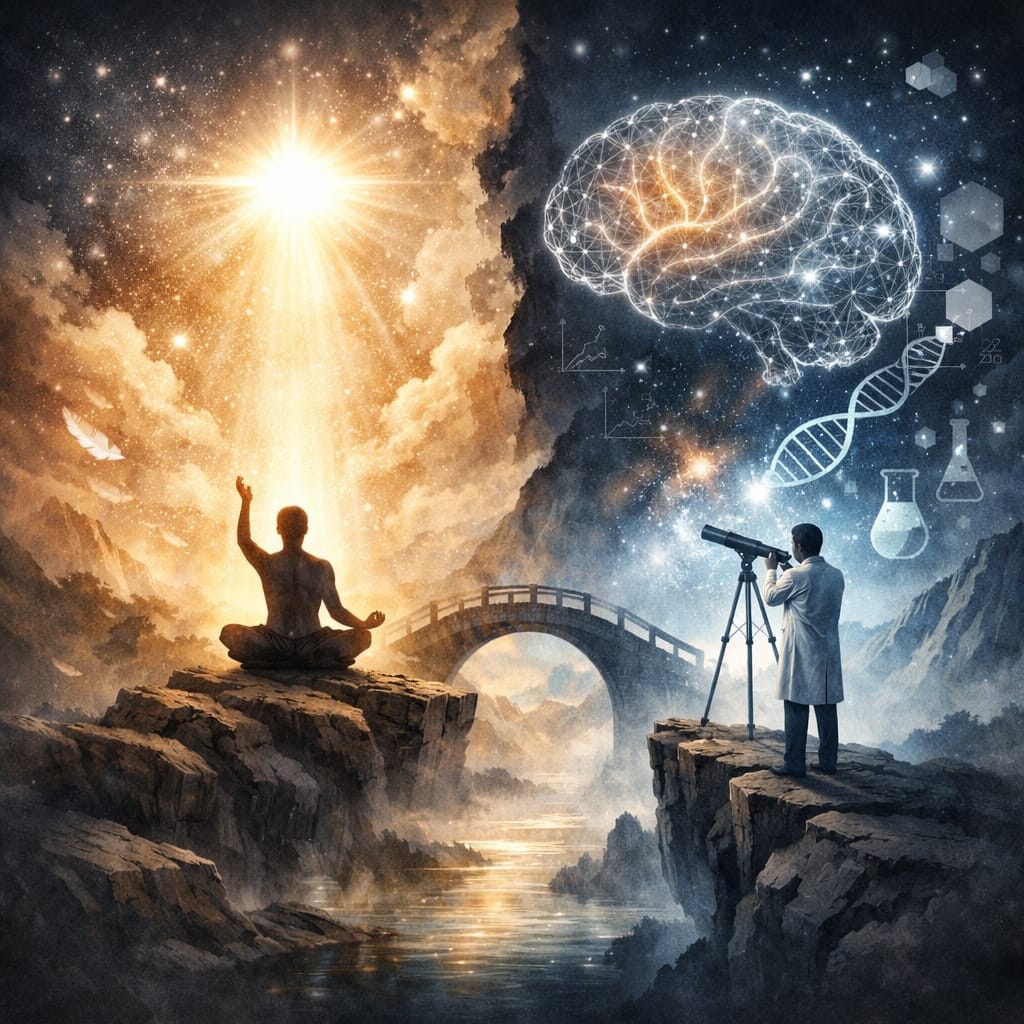
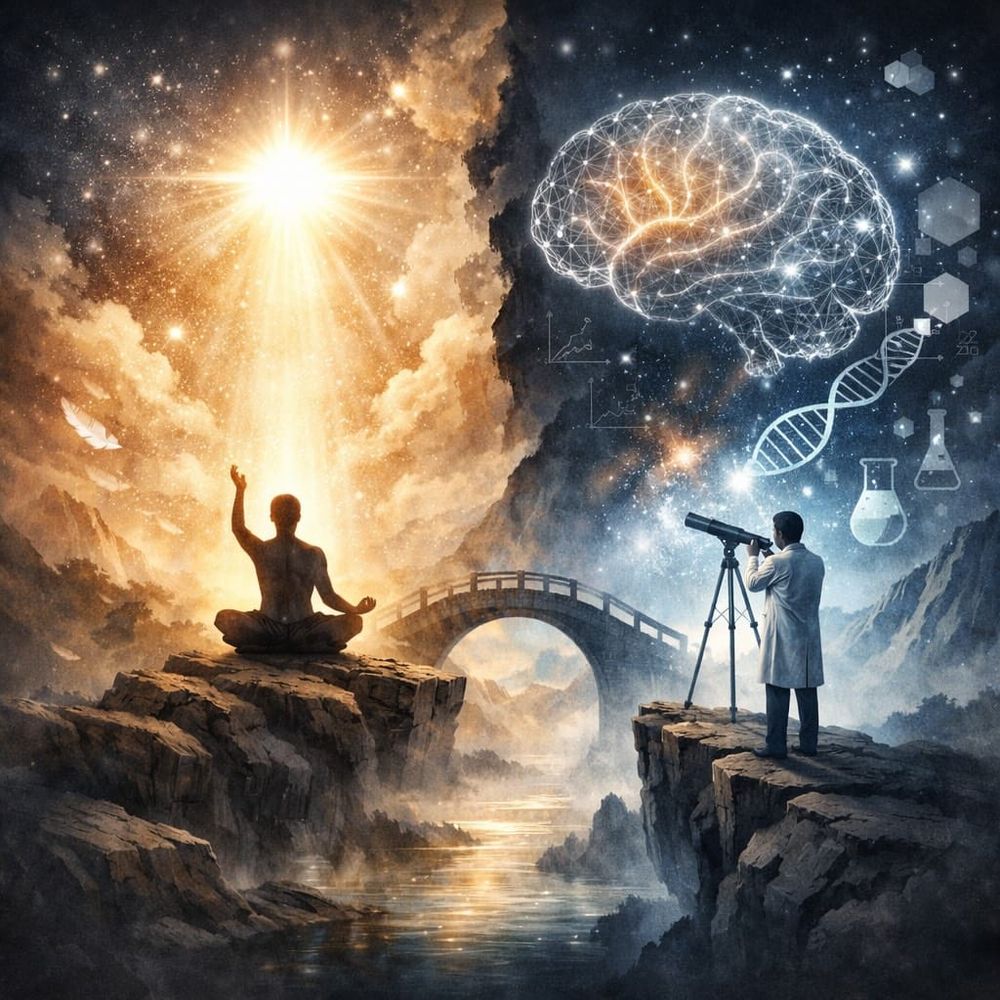
Believing does not require proof, it gives meaning, an orientation that mobilizes. When we say "I believe" we are building a bridge: where knowledge is not enough, uncertainty in which we choose a direction. This is both the greatest strength and the greatest danger of faith.
It would be difficult to write this article if we did not understand the difference between the two. Now, from a philosophical and scientific point of view Let's try to look at it.
The Philosophical and Scientific Background
Philosophical Perspective
Plato: Episteme and Doxa - Knowledge and Blood
Plato distinguished between knowledge and opinion: episteme, true knowledge; doxa, opinion or belief. (1*)
Knowledge is fixed, proven and reliable. Opinion, on the other hand, is based on appearances, variable, person to person. can be differentiated.
Which one do we live with in our daily lives?
Mostly with doxa. About the people around us, about ourselves, about our future. The vast majority of our thoughts are not knowledge but belief. And not being able to distinguish between belief and knowledge also pollute.
For me, Plato's distinction shows this: The real work is to see if what we think we know now is really knowledge. to distinguish whether it is his blood or not.
Kierkegaard: Leap of Faith - When Knowledge Ends
Kierkegaard says this: At some point knowledge ends. The evidence runs out. And there you have to make a choice you'll stay. (2*)
He calls it a "leap of faith". Not a blind surrender, but knowing the limits of knowledge, yet choose a direction.
For me, this shows that True faith does not come from ignorance. On the contrary, it comes from knowing where knowledge ends. one believes in a healthier way. To be able to say, "I don't know this and I can't know this, but I believe this" is both intellectual the most powerful manifestation of both honesty and faith.
Nietzsche: Mere Knowing Creates a Gap in Meaning
When Nietzsche says "God is dead," what he means is that people are beginning to give up the great beliefs they turn to for meaning. what's left when you start? (3*)
Pure mind, pure knowledge.
And this often opens the door to nihilism: "Everything is temporary, the universe is meaningless, what difference does it make?" "knowing" cannot produce meaning. Meaning does not refer to a place, a thing, a value. comes from faith. Knowledge without faith can leave existence cold and empty.
When I first read it, I found it disturbing. But it is true. Anyone who tries to live a completely evidence-based life will sooner or later and then the question arises: Why?
William James: Faith That Works is Valid
William James, the founder of pragmatism, asks: How do you know if a belief is true? Judging by the results. (4*)
It's something that pushes you to learn more, makes you act more responsibly, makes you make better decisions. faith means it works.
But there is a critical point here: A belief that immobilizes you, that puts the responsibility on the outside. it feels powerful, but it's sterile. If we say "the universe will take care of it" and do nothing, does the universe really take care of it? To James. the answer is clear: That belief does not work, therefore it is not valid.
Scientific Perspective
Rotter: Internal and External Locus of Control - Responsibility Address
Julian Rotter's research reveals something very clear: Their lives are determined by external forces (fate, luck, others, universe) are much more unhappy than those who believe their own actions are determinative. (5*)
This is called the external locus of control. And this is precisely the psychological equivalent of "believe and it will happen". Responsibility externalization brings relief in the short term. In the long run, it leaves people passive, helpless and unhappy.
For me, what this research shows is this: Belief ceases to be belief when it is used to avoid responsibility. it turns out. It becomes a kind of self-deception.
Bandura: Self-efficacy - The Science of Belief Foundation
Albert Bandura's theory of self-efficacy shows when belief works: "I'm convinced I believe" is not an empty suggestion, but a scientific variable that directly affects performance. (6*)
This belief is not based on evidence. But it mobilizes. It insists. It makes learning possible. And the more we learn. belief turns into knowledge.
There is a beautiful cycle here: Properly directed faith paves the way to knowledge. The same way that faith gives birth to knowledge. on the ground the two are no longer rivals.
Kahneman: System 1 and System 2 - Belief and Knowledge Together Works
Daniel Kahneman identifies two systems of thought: System 1 fast, intuitive, faith-like. System 2 slow, analytical, knowledge-like. (7*)
Both are necessary.
Without System 1 life is paralyzed; we cannot analyze every decision. System 2 , we are mistaken; we cannot trust every intuition.
This structure in our brain tells us this: Faith and knowledge are not mutually exclusive. Healthy functioning a mind that uses both together. The problem is to disable one of them completely.
Illusion Danger
Dunning and Kruger's research reveals a disturbing truth: Those who know the least he thinks. Humility increases with the attainment of true knowledge. (8*)
The most dangerous place is where you say "I know" but in fact you only believe.
This illusion contaminates both knowledge and faith. Someone who says, "I know for sure," is in fact a believer. and that's both intellectual hypocrisy and the biggest obstacle to growth. And this is both intellectual hypocrisy and the biggest obstacle to growth.
The Real Problem
To Mistake Knowledge for Faith, Faith for Avoiding Responsibility Use
There are two separate dangers.
First: Presenting what you believe as if you know it. When you say, "It will be so," do you believe it based on evidence or on desire and belief? is based on the disease. This is the most common form of Dunning-Kruger.
Second: Using faith to externalize responsibility. "The universe will take care of it", "it was fate", "I wanted it". but it didn't happen" frames. Waiting without acting. This is not faith, but the instrumentalization of faith.
And both lead to the same place: A spiral of unhappiness.
Pure knowledge leads to nihilism: "I know everything, nothing makes sense." Pure faith leads to dogma and leads to immobility: "What is going to happen is going to happen. It is pointless to do anything."
Both, when misused, leave you in the same place: Unhappy, unable to grow, in the loop.
When I put it like this, it became very pessimistic, but the situation is actually not that depressing with the right approach.
Solution Suggestions
I would like to share with you the correct approach guide that I prepared for myself I consider it a debt to myself to share:
Testing Faith with Knowledge
I look at where a belief takes me. Does it make me learn more, or does it make learning unnecessary? makes it so? Does it mobilize me or immobilize me? Does he give me the responsibility or does he throw it out?
I ask myself James' question: Does this faith work?
If the answer is yes, I continue to hold that belief. If no, I question what that belief actually is. when a desire or a fear comes up. It is not faith.
Accepting the Limits of Knowledge
I can't know everything. And this is not a weakness.
Recognizing where my knowledge ends is the beginning of both intellectual honesty and healthy faith. "I don't know I don't know, but this is what I believe", using both in the right place.
The hadith "Tie your camel, then rely on it" sums it up very well. Do everything you can. Learn what you can. learn everything. Then let it go. It's neither submission nor control obsession. Balance of the two.
Hizalanmak - Where Knowledge and Faith Meet
At the core of what many people reduce to "if I believe it, it will happen" is this: Stop fighting life. To move in the same direction with him.
Some things can be changed, some cannot. Change what you can and leave the rest. Peace, it doesn't come from bending life to your will. It comes from learning to stay calm inside.
Manifesting is not magic. It's not a miracle. To be aligned in essence. To move in harmony with the whole of existence and to let life work with you. What makes this possible is neither blind faith nor cold calculation. Neither to carry together.
Conclusion and Message to the Reader
To believe or to know?
This question is inherently wrong.
The question is: Will we feed our perspective with awareness or blind beliefs?
I think it is useful to blend knowledge with humility. With everything we say "I know" we can stop and ask: Really? What is the evidence? Or do I want to believe that?
We need to nurture our faith with responsibility. In everything we say "I believe", the question should be in our minds: This belief does it mobilize me? Does it help me learn more? Or does it allow me to escape responsibility?
Knowing and believing are not rivals. Knowledge tests belief, belief paves the way to knowledge. These two When it works properly, we fall into neither nihilism nor dogma.
Right in the middle, we will survive.
See you in the next article.
Until then, stay in love.
Source and Inspired Texts
- Plato - Menon (Episteme and Doxa)
- Kierkegaard, S. - Fear and Trembling (leap of faith)
- Nietzsche, F. - Joyful Science (Nihilism and the void of meaning)
- James, W. - The Will to Believe (Pragmatism)
- Rotter, J.B. (1966) - Generalized Expectancies for Internal Versus External Control of Reinforcement
- Bandura, A. - Self-Efficacy: The Exercise of Control (Self-efficacy)
- Kahneman, D. - Fast and Slow Thinking (System 1 and System 2)
- Kruger, J. & Dunning, D. (1999) - Unskilled and Unaware of It