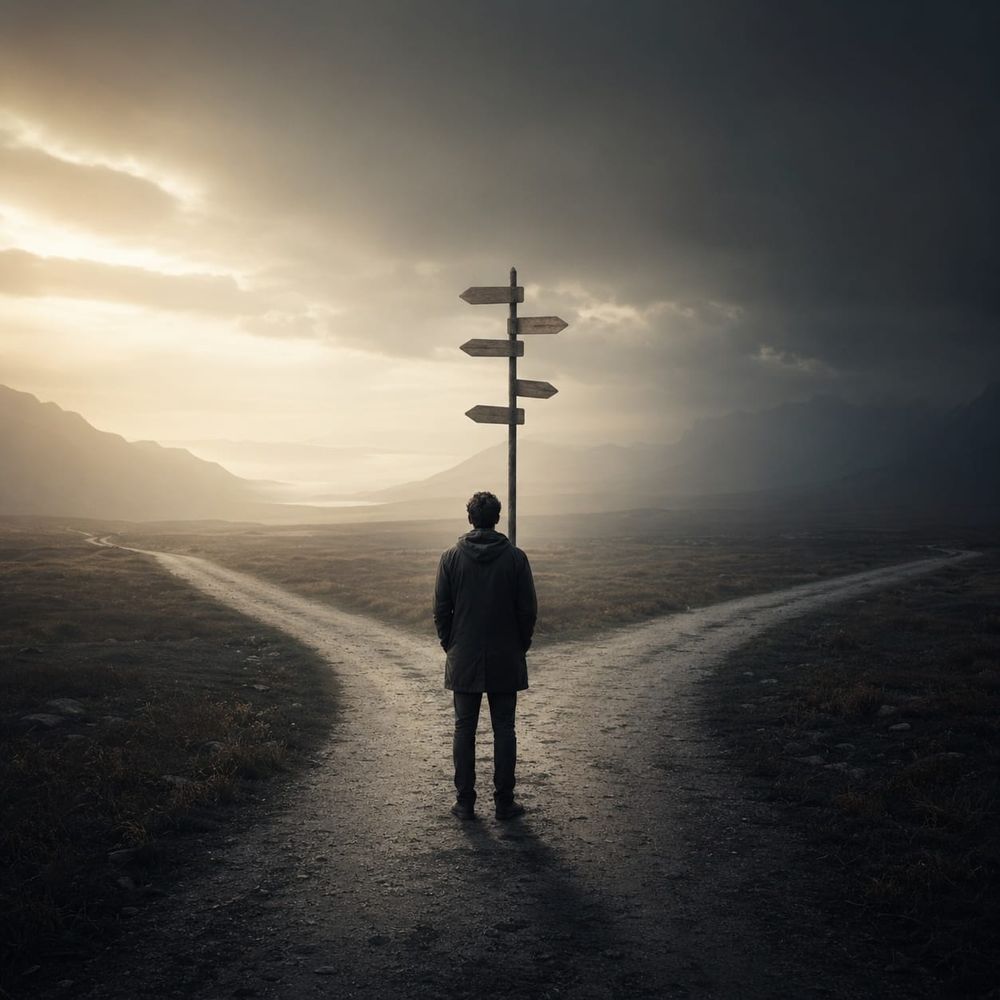
Some evenings we open any platform (Netflix, Youtube, TV series, etc.) to watch something. One we're suddenly inundated with thousands of content. Let's watch this one, let's watch that one, let's watch that one, let's watch that one, let's watch that one, let's watch that one. There's one we can't choose anything. Finally, we say "enough is enough" and we turn something on, but that feeling always remains: "Maybe we could have watched something better, but we turned this on."
This is a very ordinary, small example. It may even be considered insignificant. But life is not like that, every step we take, Every word we say is actually a different choice. Each one is a different responsibility and each choice is followed by Whether we like it or not, there is a different outcome that we have to endure.
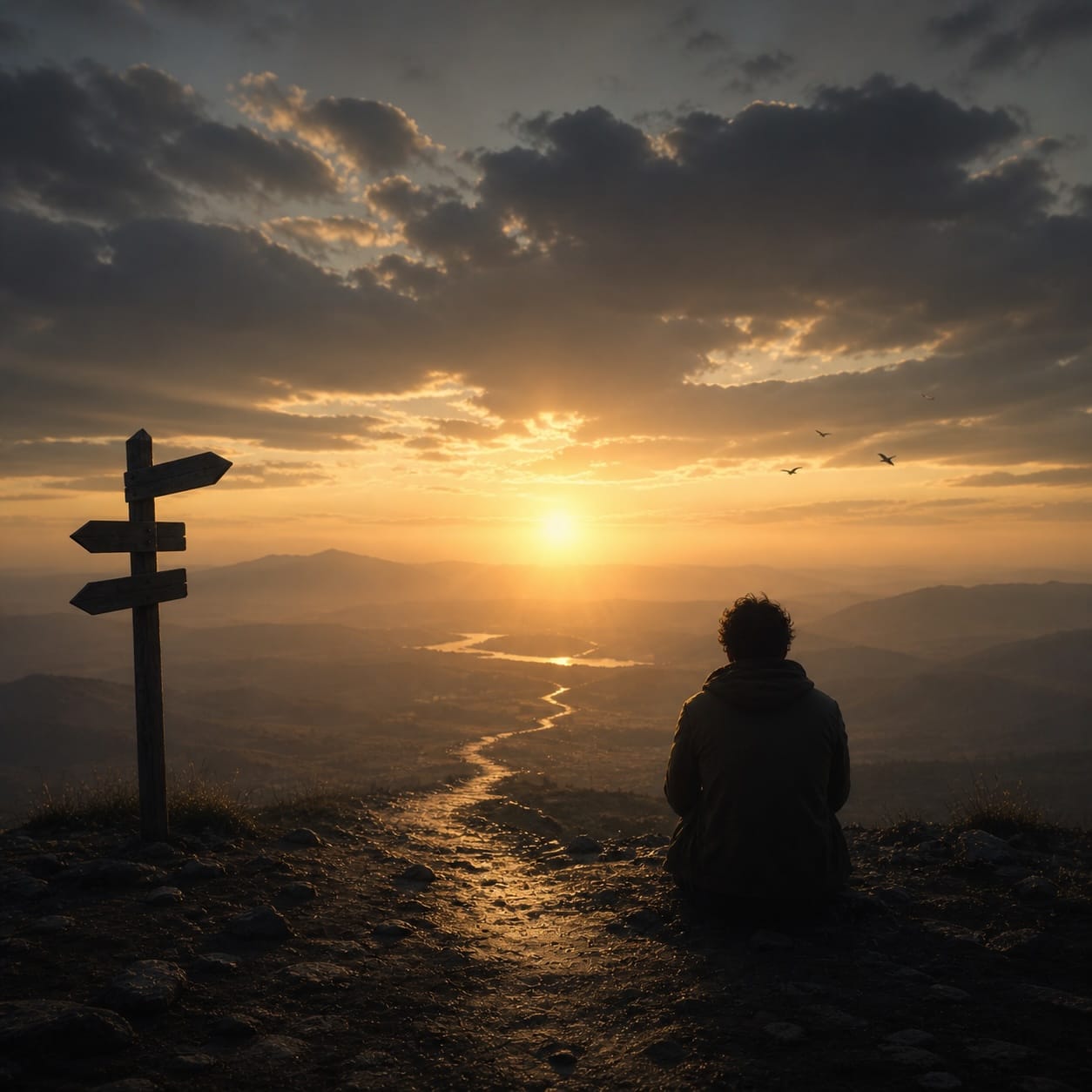
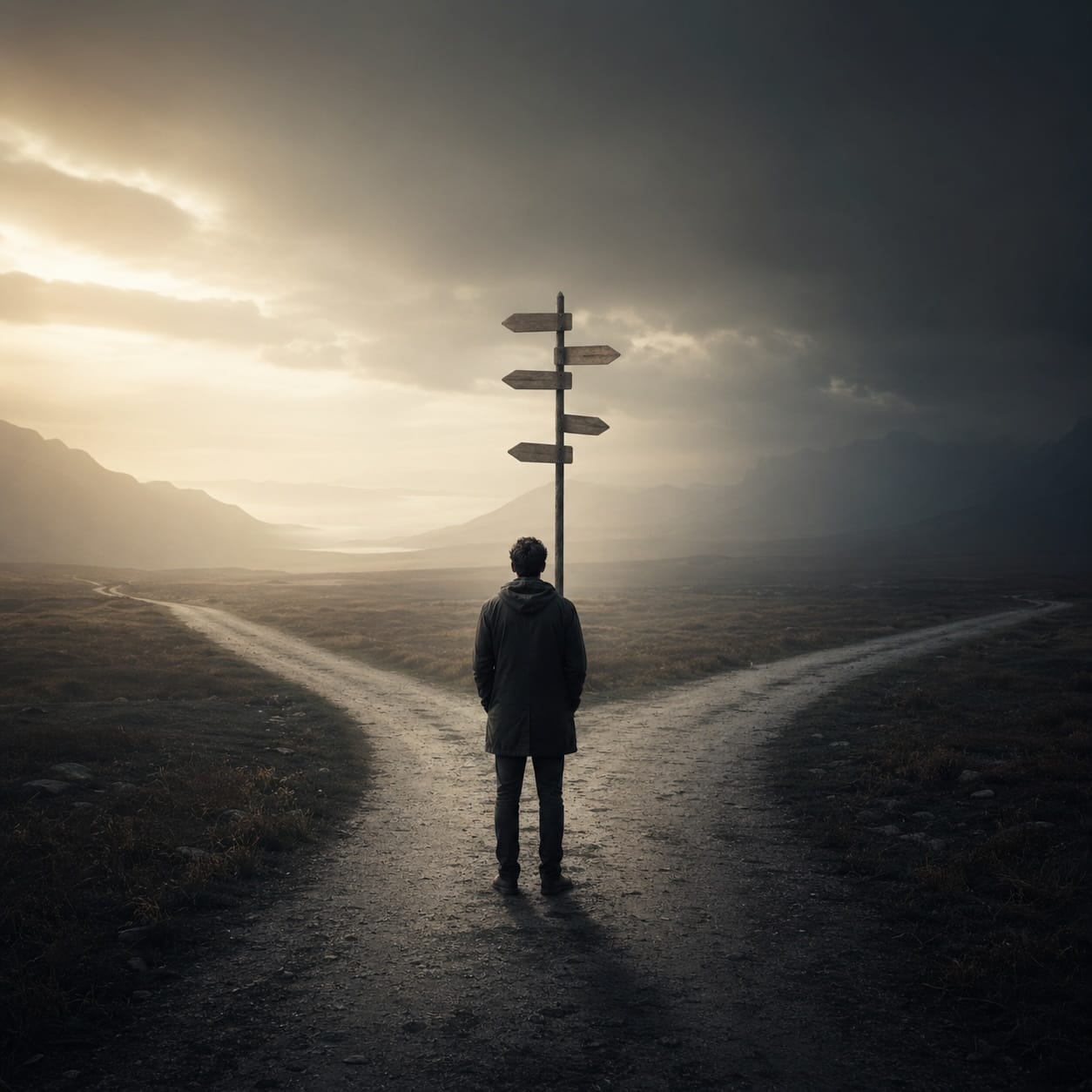
Maybe I started with a trivial example, but the same feeling can be found in bigger places. Change of job, city, relationship, career. The options are many. Instead of making a decision, we wait. We say, "Let me think about it some more." Weeks, sometimes Months go by.
But we don't realize that waiting is also a choice. And at the end of it, there's a choice we have to make. Conclusion.
It was precisely this realization that led me to write this article. At some point I realized that the thing I regret most in life it wasn't what I did, it was what I didn't do. Words I didn't say, decisions I didn't make, doors I didn't open.
Fearing the responsibility of voting, I chose not to vote, but not voting has a price. I'm just saying It took time to understand.
In this article I will explain why choice is so difficult, the cost of not choosing, and why every choice (or not choosing) is the same. We will try to examine philosophically and scientifically that it is also a responsibility.
Philosophical and Scientific Background
Philosophical perspective:
Kierkegaard talks about the "anxiety of possibility". The more doors we have in front of us, the more the greater the weight. Infinite possibility does not liberate man; on the contrary, it makes him dizzy. It's called "the vertigo of freedom." he says. (1*)
But Kierkegaard also says that the way out of this vertigo is not not to choose, but to choose is to take responsibility. Because not choosing is also a choice. Just a more cowardly choice.
Viktor Frankl saw that even in the Nazi camps they could not take away a person's freedom of choice. Stimulus and reaction there's always a little space in between. And in that space, one makes a choice. Even if this choice is a small one, it can make you that's what makes you human. (2*)
Frankl makes an interesting word game here. He divides the English word "responsibility" for responsibility into two: response-ability. That is, the ability to react. Responsibility is not a burden, but proof of human capacity.
Epictetus makes it much clearer: the only thing we have control over is our own choices and reactions. This is both a freedom and a responsibility from which there is no escape. (3*)
The Stoics say something that seems like a paradox: constraints can be liberating. Narrowing the choice focuses creates. Being fully committed to something is a more powerful place than being tossed between endless options.
Scientific perspective:
Barry Schwartz has a classic experiment. A jam stall with fewer varieties offers many times more jam than a stall with more varieties. making sales. The more options, the more difficult the decision and the less satisfaction (4*)
Schwartz identified two profiles. Maximizer: always looking for the best. Satisficer: content with good enough. Maximizers make objectively better choices, but they are much more unhappy. Because after they have chosen, they continue to seek it doesn't end. Their minds are constantly asking "what if there was something better?".
I cannot pass without mentioning the issue of decision fatigue. Every decision is an action that drains our mental energy. The time of the day. the decisions we make towards the end of the day are of much worse quality than the decisions we make at the beginning of the day. I don't know why Obama wearing the same color suit. Mental energy for big decisions by automating small decisions (5*)
But perhaps the most striking finding is the regret research. In the short term we regret what we have done. But in the long run In the run-up, years later, we most often remember with regret what we did not do. The cost of not choosing, the cost of choosing is greater than its cost. (6*)
Social and cultural influences:
Consumer society is based on the promise that "you can be whatever you want". It sounds motivating. But it's actually a chronic it creates a feeling of inadequacy. Because infinite choice means infinite feeling of "I haven't reached the best one yet".
Check out dating apps. The next better one is always a swipe away. It's getting harder to connect because the door it feels impossible to close it. But not closing the door at all is also closing a door; only your own.
It is the same with the career issue. For the older generation, the profession was limited, it was deepening. Today there are endless job opportunities. possible. But it can also be the door to not being fully committed to anything.
There is something else in the culture, something that is not often addressed: it is increasingly normalized to avoid taking responsibility. Not choosing, continuing to wait, saying "the conditions are not favorable", dismissing it as "nothing will change anyway". These things all ways of escaping responsibility. And this escape pulls us down. Because the result comes again, only this time we don't seem to have it.
Real Problems and Solutions
The real problem is that there are two separate traps and both lead to the same door.
First: being paralyzed by too many options. Not being able to choose, keep waiting, "let me think a little more" enter the loop.
Second: choosing not to choose in order to avoid the responsibility of voting. "It's not the right time yet." "A little more wait." These sentences are often fear disguised as protectionism.
But in both cases we come to a conclusion. When we don't choose, life chooses us. And that choice has a price; only this time we are not the ones making the decision, but we are responsible for it, whether we choose it or not.
Whatever the responsibility of choosing, it is no less than the responsibility of not choosing. Most of the time bigger. The flow of life, When we look at the basis of science, we see the same thing: every action produces a reaction. To choose or not to choose is a it leads to consequences. When we choose, we can see the outcome faster and if we have made a misstep, we can change it, But when we don't choose, the longer this period lasts, the greater the regret.
This realization did not come easily for me. I waited for the "right time" for a long time. time doesn't come by itself. It is necessary to choose him.
Again, I would like to share with you these practices that I prepared for myself:
adopting the "good enough" standard.
Not every decision we make has to be the best decision we have ever made. Learning to be a Satisficer is not giving up, liberation. Maximizer, the voice inside us will say "it was better". But that voice will never shut up; moving forward in spite of it possible.
Deliberately reducing the number of options.
It is useful to look at restriction not as a loss, but as creating focus. Deliberate narrowing, even in small decisions helps to accumulate mental energy. When we do that, we save that energy for big decisions.
Taking responsibility for the election.
As Frankl says: there is always a gap between stimulus and response. Elections are being held in that vacuum. Making the choice and owning the outcome is a stronger place than continuing to wait.
Taking irreversible decisions.
It sounds paradoxical, but the research is clear: the brain makes peace with the irrevocable decision. "I have made this decision. I'm going to go deeper on the path" reduces regret. The open door can sometimes be the biggest trap.
Stop post-election comparison.
It makes the most sense to look at it as the decision has been made, the door is closed. The question "what if the other one was better" is no longer information, it is mental. is nothing but noise. Perhaps our mind will present it as knowledge. But recognizing that noise It makes more sense to me to take responsibility for it and to re-elect it when necessary.
Every choice is a freedom. And with every freedom comes responsibility.
It can be heavy to take this responsibility. But not taking it on is heavier; it just takes time to realize it, but sometimes By the time we realize it, it can be too late, it can turn into depression, negative feelings.
Kierkegaard said that possibility makes you dizzy. Frankl showed that it is impossible to escape responsibility. Regret research has revealed that years later, we remember the things we did not do the most.
Maybe freedom is not in drowning in endless choices, but in choosing one and taking full responsibility for it, rightly or wrongly. to be able to take it on.
This question is for you, my dear readers:
Is there anything in your life right now that you keep waiting for, but that you really need to choose?
See you in the next article.
Until then, stay in love.
Sources of Reference and Inspiration:
(1*) Søren Kierkegaard, The Concept of Anxiety
(2*) Viktor Frankl, Man's Search for Meaning
(3*) Epictetus, Handbook
(4*) Barry Schwartz, The Paradox of Choice
(5*) Roy Baumeister, Decision Fatigue research
(6*) Daniel Kahneman & Amos Tversky, regret research